

Iyengar Yoga is a form of Hatha Yoga developed by guru B.K.S. Iyengar (1918 – 2014). He is considered one of the most influential yogis of all time, having spread modern yoga culture across the world.
He popularized and systematized traditional yoga in a way that was accessible, safe, and effective for people of all ages, physical abilities, and health conditions.
His life and work left a significant mark on the world of yoga, and TIME Magazine named him one of the most influential people of the 20th century.
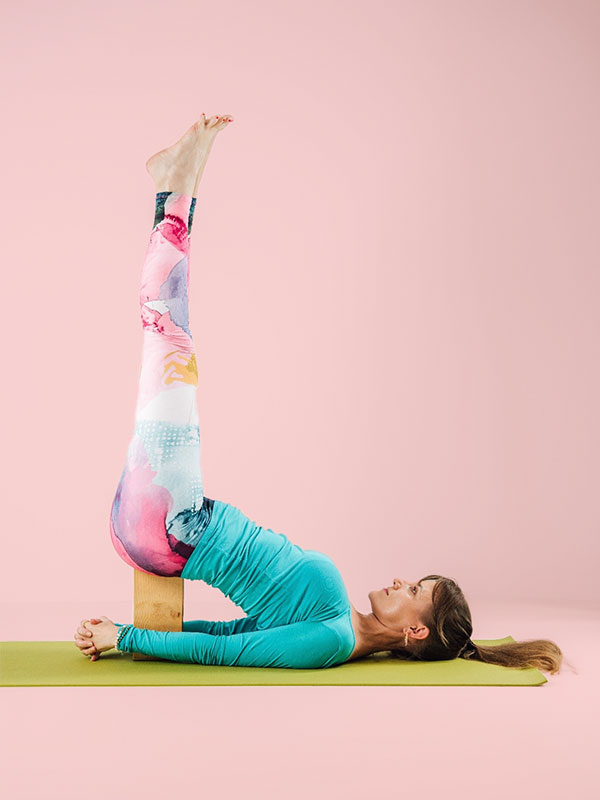
Iyengar Yoga stands out for its precise alignment in asanas (yoga poses), use of props, and gradual progression that allows deep transformation on all levels. It focuses on safety, accuracy, proper execution, synchronization of breath and movement, and inner awareness.
The practice is tailored to the individual and, thanks to gradual mobility development, is accessible to a wide range of people. It is ideal for those who want to deepen their understanding of yoga, focus on the body, mind, and spirit, and enjoy a safe and long-term practice.
One of the most recognizable features of Iyengar Yoga is the precision of body alignment in every pose. Iyengar teachers pay close attention to how the body is positioned, as posture is essential for practice effectiveness and injury prevention.
Iyengar Yoga is known for its use of various props such as blocks, straps, bolsters, blankets, and more. These props help students achieve proper alignment and make the asanas accessible to people of all physical abilities and age groups.
Through the use of props and precise adjustments, Iyengar Yoga is especially suitable for people with physical limitations, injuries, illnesses, and other specific needs.
The practice is adapted to each individual to prevent injury and support increased flexibility and strength. This is one of the reasons why Iyengar Yoga is popular among people recovering from injuries, older adults, and those suffering from chronic pain.
Iyengar Yoga is a methodical style of yoga. Students stay in individual asanas for longer periods to gain a deeper understanding of the body and improve alignment. The emphasis is on performing each pose correctly and progressing gradually.
Iyengar Yoga teachers must undergo long and extensive training and pass a certification process that involves a rigorous examination of knowledge and skills. This includes a deep understanding of anatomy, yoga philosophy, asanas, pranayama (breathing techniques), and teaching methodology. This training ensures that Iyengar Yoga teachers are well-equipped to adapt the practice to the needs of their students to achieve the best possible results.
The full training process to obtain an Iyengar Yoga teaching certificate usually takes between 3 and 10 years, depending on the level the candidate wishes to achieve. Iyengar Yoga certification is highly demanding and includes in-depth theoretical and practical training under the supervision of experienced teacher-mentors.
After passing the initial exam, Iyengar Yoga teachers must maintain their certification by attending continuing education courses, workshops, and further training.
“Yoga allows you to rediscover a sense of wholeness in your life, where you don’t feel like you’re constantly trying to piece yourself together.”
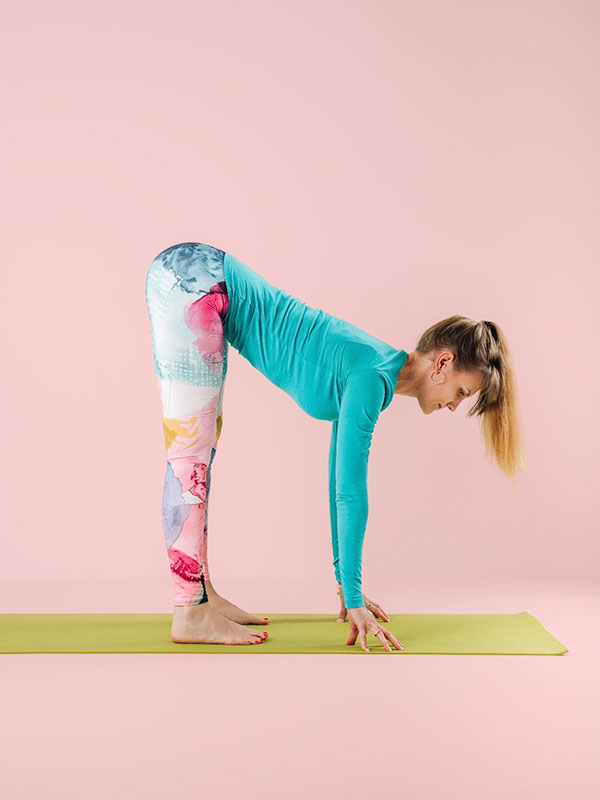
Every session can feel like a mini therapy – each person takes from it exactly what they need in that moment. Thanks to its emphasis on precision, alignment, and the use of props, it is accessible to people of all ages and physical abilities. It helps build strength, reduce stress, and deepen inner connection – all in a safe and effective way.
It doesn’t matter where you begin – what matters is that you start.
Each class is an opportunity for deeper self-connection: to listen to your body, sense how you feel, and discover who you truly are.
Iyengar Yoga strengthens muscles through precise and consistent practice. Since poses are held for longer durations, muscles are built and toned.
Iyengar Yoga focuses on correct body alignment, which leads to improved overall posture. With regular practice, issues such as spinal curvature (kyphosis, lordosis) or poor posture caused by a sedentary lifestyle are reduced. Body alignment also brings cellular alignment – when every cell is in its proper place, it functions efficiently, remains fluid, and stays healthy.
Iyengar Yoga is especially beneficial for people who suffer from back pain, as it helps improve spinal alignment and strengthen the muscles that support the spine.
Because Iyengar Yoga focuses on precise execution of poses, it enhances body coordination and balance. Yoga supports the awareness of bodily sensations and encourages mindfulness, leading to greater consciousness of how the body moves and functions in space.
Thanks to the use of props and its emphasis on precision, Iyengar Yoga is suitable for people of all ages and physical abilities. Teachers can adapt the exercises to meet the specific needs of each individual. For older adults experiencing a decline in mobility, strength, and balance, Iyengar Yoga is especially beneficial, as it allows for slow and safe progress.
By focusing on physical alignment, breathing, and being present in the moment, stress, anxiety, and tension are reduced. The mind is given a chance to rest and take on the role of an observer.
Iyengar Yoga encourages focus on the present moment, which leads to greater mental clarity and better management of thoughts.
Iyengar Yoga encourages synergy between body, mind, and spirit. Through precise practice and a meditative approach, the student can reach a deeper state of inner peace. A union of the physical body, mind, and soul in one space and moment – here and now.
“Extension brings space, space brings freedom, freedom brings precision. Precision is truth.”
For people with no or up to one year of experience: standing poses, seated poses; backbends, forward bends, twists, inversions, preparation for headstand (sirsasana) and shoulder stand (sarvangasana), restorative and breathing exercises.
The practice is always tailored to the needs and health conditions of the group members.
Standing poses, seated poses; backbends, forward bends, twists, inversions, headstand (sirshasana), handstand and shoulder stand (sarvangasana), restorative poses and more advanced breathing exercises.
The practice is always adapted to the needs and health conditions of the group members.
Yoga in the workplace is an effective strategy to improve employee's health, productivity, and satisfaction.
Main reasons why workplace yoga is a great choice:
Main benefits of individual Iyengar yoga sessions:
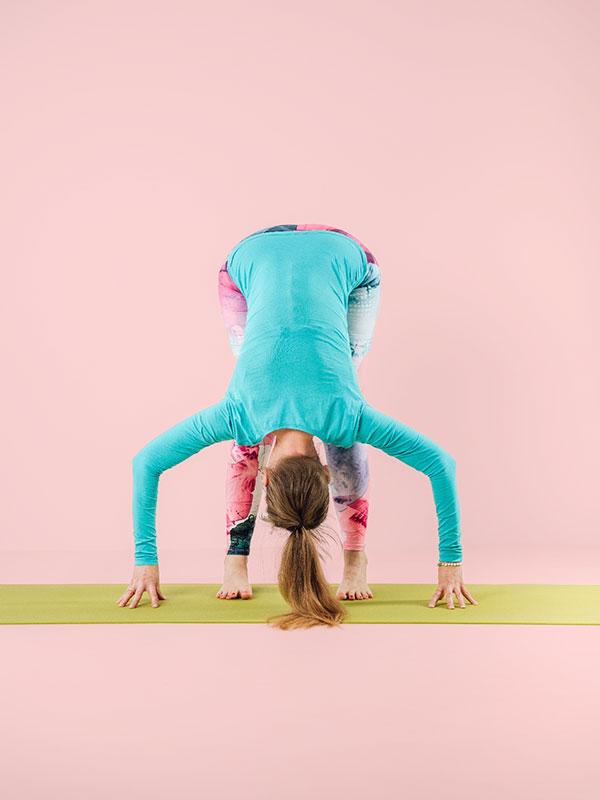
Yoga allows you to find a new kind of freedom you may never have known existed.”
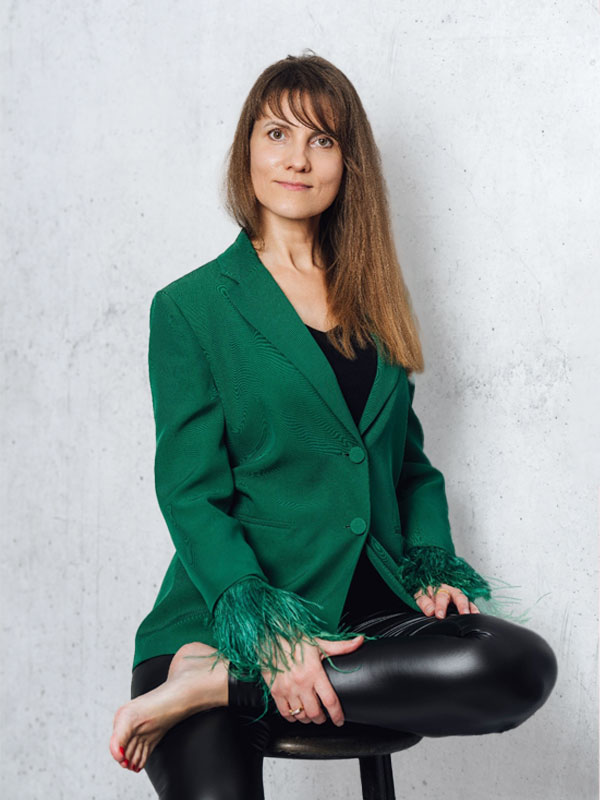
I first encountered Iyengar Yoga in Latvia in 2006. In 2014, I obtained my Iyengar Yoga teacher certification (Introductory 1). Since then, I have been continuously deepening my knowledge. I’m very grateful to have had the opportunity to study with various teachers from Russia, Latvia, Italy, the USA, India, and Germany (Usha Devi, Rita Keller, Manouso Manos, Laurie Blakeney, Gabriella Giubilaro, Bobby Clennell, Kevin Gardiner, Michael Forbes, Aleksander Borisenko, Tamara Bujanova, Elena Smolyaninova, Elizabeth Brass).
I’m part of the first generation of 13 certified Iyengar Yoga teachers in Slovenia. I have 19 years of personal practice and over 12 years of experience teaching yoga in group settings, privately, on retreats, and in corporate environments.
I offer my services in four languages – Latvian, Slovenian, English, and Russian.
Autumn semester (from early October to February)
Spring semester (from early February to June)
It is recommended to join the classes at the beginning of the semester. If that’s not possible, you can join later, and the semester fee will be adjusted accordingly. A maximum of 10 people per group.
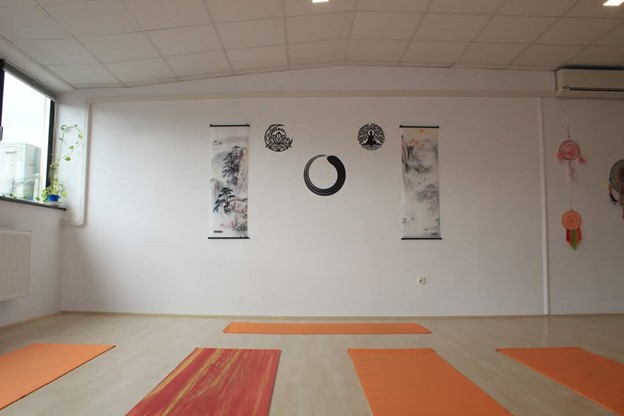
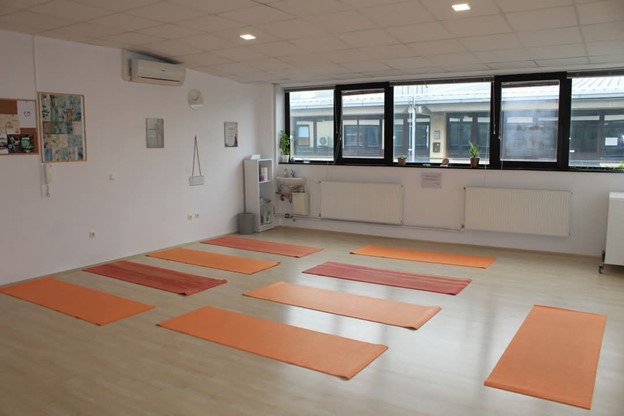
Group classes take place in Ljubljana, in the Vič area.

In this conversation, I share my journey with Iyengar Yoga. We also touch on the importance of patience, presence, and inner stability – qualities that the practice uniquely cultivates. You are warmly invited to watch!
Come to an introductory class and experience how good it feels to pause, breathe, and reconnect with yourself. This is your opportunity to see if this practice suits you in a calm and supportive environment.