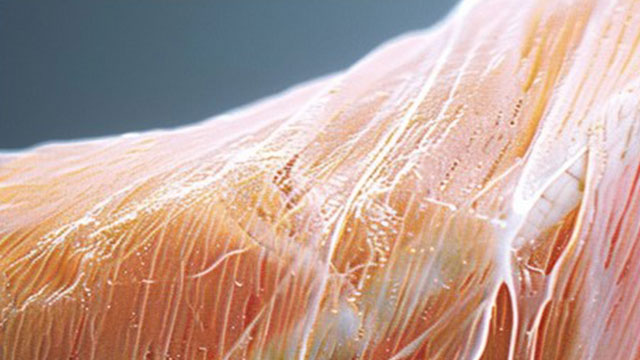
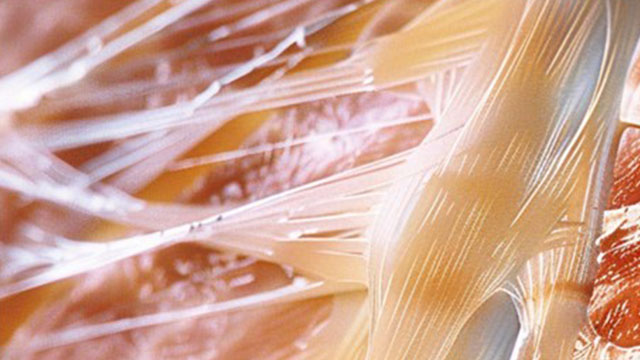
We can think of the fascial system as a continuous network of fascia that extends throughout the entire body, from the top of the head to the tips of the toes. It doesn’t just surround individual structures – it penetrates deep into tissues, reaching into muscle and nerve cells, even into the cell nucleus.
Fascia is the medium through which the rivers of life flow – fluids, nutrients, and electromagnetic energy. It is the force, the breath of life, that sustains our existence and enables our functioning.
All our sensations, thoughts, lifestyle patterns, physical (mis)alignments, breathing habits, traumas – both physical and emotional – are stored in the fascial system. This can lead to the formation of adhesions in the fascia, resulting in reduced flow of blood, oxygen, and nutrients, limited mobility, increased inflammation, chronic pain, and restricted joint movement.
Have you ever heard of the fascial system and why it’s essential to life? It plays a role in flexibility, strength, pain, the body’s electromagnetic field – and is even said to transmit consciousness.
Recent anatomical research has sparked a global revolution that is radically changing how we view the living human body.
Why? Although the fascial system was long considered insignificant, since 2017 it has been recognized as the largest organ in the body. Fascial research has sparked a wave of new insights that challenge conventional beliefs about how the body functions.
“In the fascia, we see the framework of life, the dwelling where life resides.”
“I know of no structure in the body quite like fascia.”
“With every perspective on fascia, a miracle appears.”
“It seems that the soul of a human being resides in the fascia of the body.”
Healthy fascia produces hyaluronic acid, which helps tissues expand, contract, and glide without friction. This enables smooth movement and optimal body function, including that of the nervous system.
Unhealthy Fascia
Healthy Fascia
When fascia becomes unhealthy, hyaluronic acid production slows down. Tissues start sticking together, which limits movement, causes pain, and reduces the effectiveness of the nervous system. The body no longer moves as freely as it should, and adhesions (stuck tissues) develop, impairing normal function.
Since the brain is in constant communication with the body, fascial adhesions are perceived as tension. This affects not only physical well-being but can also impair cognitive function, creativity, and overall mental clarity.
Fascial health is therefore essential to our overall well-being. It enables the smooth functioning of various bodily systems, including the brain, breathing, nervous system, joints, cellular function, our electromagnetic potential, and much more.
Healthy fascia produces hyaluronic acid, which allows tissues to expand, contract, and glide smoothly without friction. This supports unrestricted movement and optimal functioning of the body, including the nervous system.
Restrictions usually occur in areas of tension and pain. Beyond discomfort, fascial restrictions disrupt the normal function of body structures and systems. They can exert immense pressure on muscles, nerves, joints, or organs – reaching up to 2,000 pounds (907 kg) per square meter.
Because the fascial system is interconnected, a restriction in one part of the body can lead to problems elsewhere – creating a complex web of tension and compression, chronic pain, fatigue, and loss of function.
Currently, there are around 24 techniques for working with the fascial system, and depending on the method, the approach to adhesions varies. Fascial decompression focuses on “melting” adhesions rather than tearing them apart.
Fascial decompression is based on the coordinated use of body weight, pressure, and diaphragmatic breathing. This holistic approach targets connective tissue – both externally and internally – releasing unwanted tension and adhesions.
Fascial therapy is suitable for anyone dealing with pain, stiffness, or reduced mobility. It helps with both chronic issues and everyday tension or fatigue in the body. It is suitable if you wish to:
I have spent over 20 years exploring life through hatha yoga, Vedic philosophy, frequencies, movement, voice, breath, and various therapeutic processes and methods. I serve as a guide and companion to others.
My approach is holistic. I see each person as a complex being with needs on every level – physical, emotional-social, intellectual, and spiritual.
I use tools, methods, and skills I’ve acquired from teachers around the world, adapting them to each individual’s situation and current challenges.
I offer my services in four languages – Latvian, Slovenian, English, and Russian.
Each session focuses on a different area of the body or bodily systems – from the jaw and gums to work on releasing emotional trauma.
After assessing your body (“body assessment”) and the issues you are facing, you will receive a personalized protocol for at-home practice.
Because a healthy fascial system is key to both physical and mental well-being (and more than that), working with the fascial system can contribute to a better mental environment among employees, as well as improved productivity, creativity, focus, and problem-solving.
The introductory course is also necessary to allow the body to gradually adapt, so you can later perform more advanced exercises.
Autumn Semester (October to January)
Spring Semester (February to May)
4 months / 16 sessions / 90 minutes
4 sessions / 90 minutes
90 minutes
In person or online / 60 minutes (includes “body assessment” and custom protocol)
3 sessions of 90 minutes each
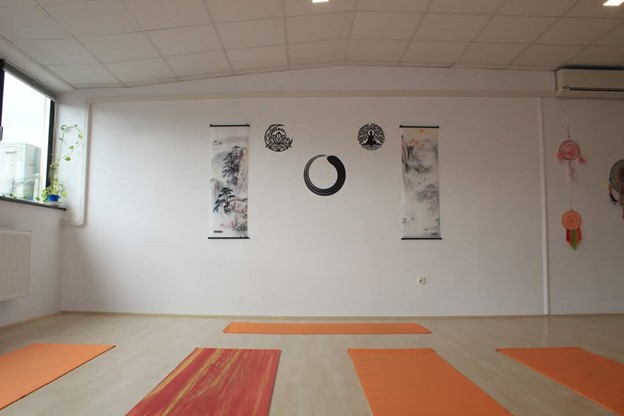
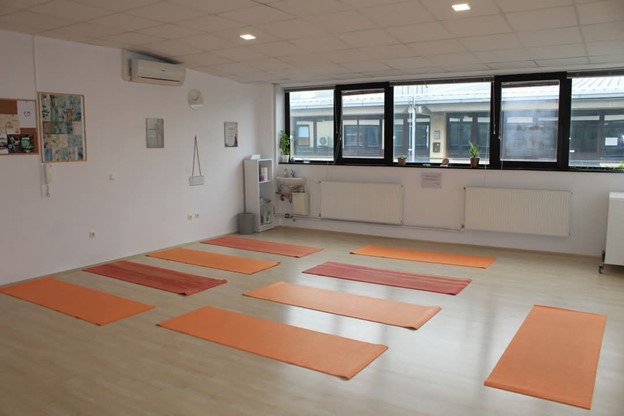
Regular weekly sessions are held in Ljubljana, Vič or Online.
Come to an introductory class and feel what it’s like to pause, breathe, and reconnect with yourself. This is your opportunity to try the practice in a calm and supportive environment.